
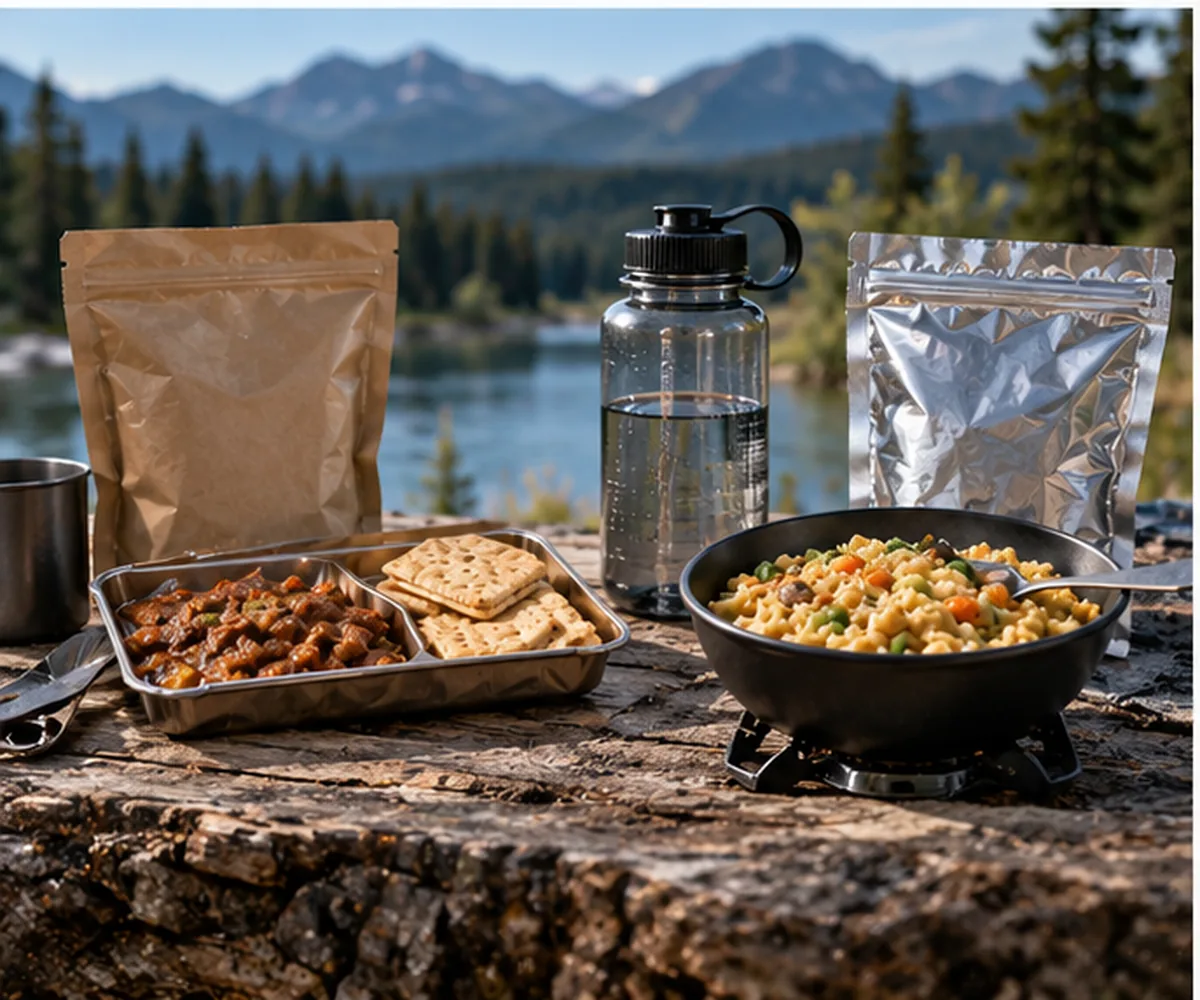
MREs and freeze-dried meals solve different problems. MRE-style meals emphasize immediate use with little preparation. Freeze-dried food emphasizes long storage and low dry weight but shifts part of the burden to your water supply.
At a glance
| Factor | MRE-style complete meal | Freeze-dried meal |
|---|---|---|
| Preparation | Typically fully cooked | Usually rehydrated |
| Prep water | Entrée generally needs none | Safe water is part of the plan |
| Weight | Carries moisture | Low dry weight |
| Storage horizon | Varies by product and temperature | Some products state very long shelf lives |
| Best fit | Evacuation, vehicles, short outages | Longer home reserves with water |
Water is the hidden variable
Freeze-dried food can look dramatically more efficient until preparation water is ignored. Food and water must be planned as one system. If tap water is uncertain or you are evacuating, ready-to-eat food removes one dependency. At home with robust stored water, the equation changes.
Storage-life claims need context
Read the storage conditions behind any shelf-life number. Heat can shorten usable storage life. Follow manufacturer directions and inspect packaging periodically.
Concrete comparison
MRE STAR M-018H
Prepared Bee lists 12 complete meals averaging about 1,200 calories each, with a heater for every meal. Entrées are fully cooked and need no rehydration water. Merchant-stated shelf life: up to five years at 70°F or cooler.
Choose this type when: speed and minimal preparation dependency matter.
Check MRE STARHeaven's Harvest 72-Serving Entrée Kit
Prepared Bee currently describes 72 servings across 11 entrée varieties and 15,720 total calories. The freeze-dried format is designed for rehydration and carries a merchant-stated 25-year shelf life.
Choose this type when: long storage matters and your water plan supports rehydration.
Check Heaven's HarvestScenario test
Two-day outage, no cooking
Ready-to-eat foods minimize preparation and preserve water for drinking and sanitation.
Thirty-day home reserve
A mixed pantry becomes practical: long-storage foods reduce dry storage bulk while ready-to-eat food covers periods when water or cooking is constrained.
Vehicle or evacuation kit
Ready-to-eat meals simplify preparation, but weight matters. Pack for actual people and days rather than filling a bag without a weight budget.
Conclusion
There is no universal winner. MRE-style meals buy simplicity by carrying more of the meal ready to use. Freeze-dried food buys storage efficiency by depending on water later. A layered supply uses each where it is strongest.
Sources
Editorial standards
Survival Gear Pro does not claim personal testing of these products. Product specifications are attributed to the current merchant listing and should be rechecked before purchase. Prices and inventory can change.