
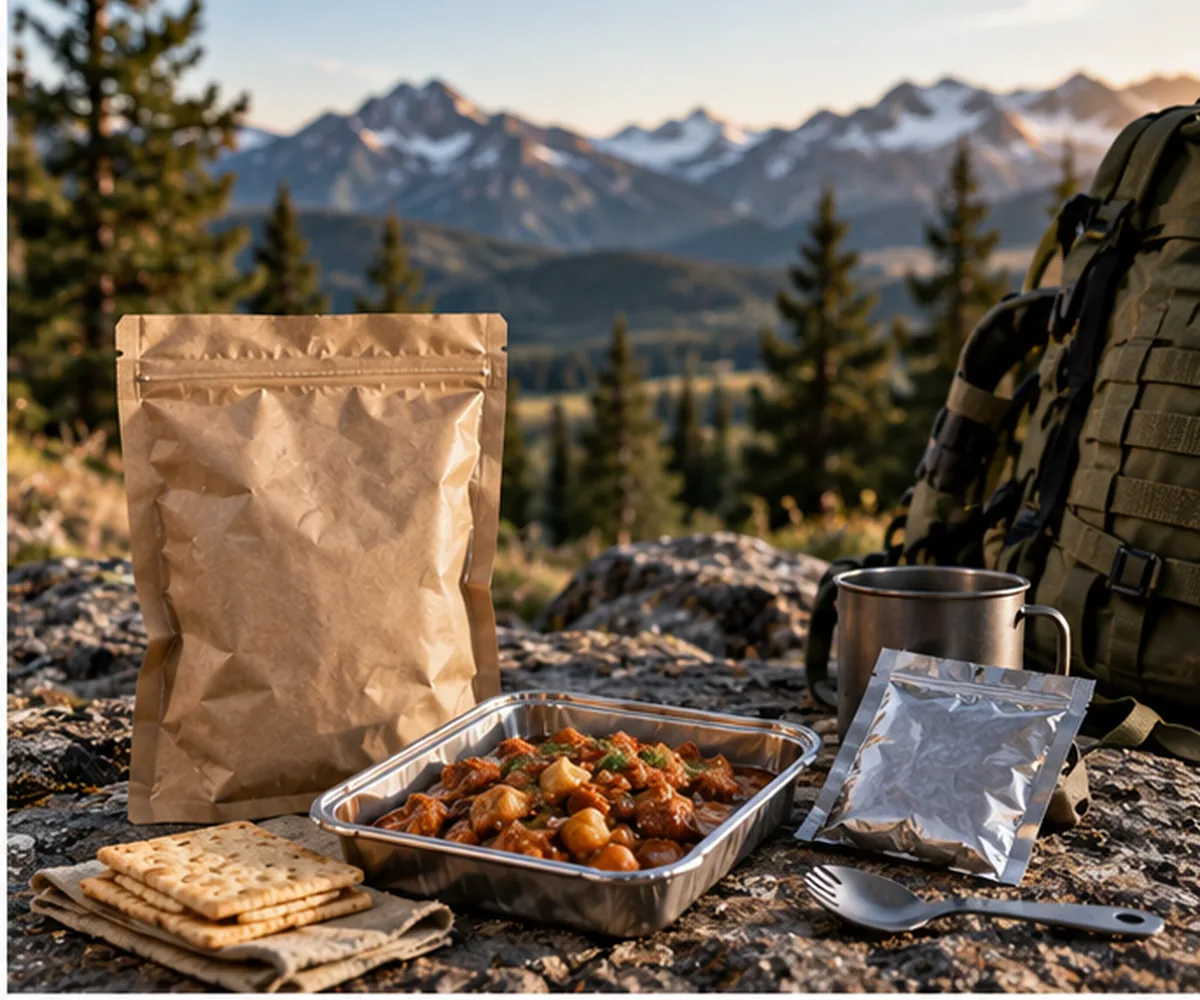
MRE-style meals solve a specific preparedness problem: getting a substantial shelf-stable meal when refrigeration and a normal kitchen may not be available. Their strongest advantage is operational simplicity, not maximum shelf life.
What an MRE-style meal actually is
Commercial MRE-style products typically package a fully cooked entrée with some combination of starches, spreads, snacks, beverages, utensils and accessories. Configurations vary, so “MRE” on a listing does not automatically mean a complete meal.
Why they work in short disruptions
- Ready to eat: a fully cooked entrée reduces kitchen dependence.
- Low preparation burden: the entrée does not need rehydration.
- Portable: individual meals can be distributed among kits or vehicles.
- Optional heating: flameless ration heaters can provide a warm entrée without a stove or outlet.
The tradeoffs
Complete meals carry their water content, which adds weight. Storage temperature matters. Menus can contain common allergens and substantial sodium, so labels matter for individual needs. Check whether a case contains complete meals or entrées before comparing value.
Buying checklist
| Check | Why |
|---|---|
| Complete meal vs. entrée | They are not equivalent. |
| Calories | Plan energy rather than package counts. |
| Menu variety | Identify repetition and dietary conflicts. |
| Heaters | Changes warm-meal capability. |
| Storage guidance | Shelf life depends on conditions. |
| Ingredients/allergens | Must fit the people relying on it. |
MRE STAR M-018H
Prepared Bee currently lists 12 complete meals, six varieties typically packed two of each, averaging approximately 1,200 calories per complete meal. A flameless ration heater is included with each meal. The listing says entrées are fully cooked, require no refrigeration before opening, and need no water for entrée rehydration.
Prepared Bee lists roughly 15 oz per meal and about 16–17 lb per case. It states up to five years of shelf life at 70°F or cooler and notes that higher temperatures reduce shelf life.
Best fit: immediate usability, portability and optional self-heating rather than the longest possible storage horizon.
Important distinction: Prepared Bee distinguishes these commercially sold MRE STAR meals from official U.S. military-issued operational rations.
View MRE STAR at Prepared BeeWhere MREs belong
Use them as one layer rather than the whole pantry. Pair ready-to-eat food with familiar shelf-stable groceries and, where appropriate, longer-storage foods. If water is uncertain, ready-to-eat food has an operational advantage; if dry weight and long storage matter and water is available, freeze-dried food becomes more attractive.
Next: MRE vs. Freeze-Dried Food.
Sources
Editorial standards
Survival Gear Pro does not claim personal testing of these products. Product specifications are attributed to the current merchant listing and should be rechecked before purchase. Prices and inventory can change.