
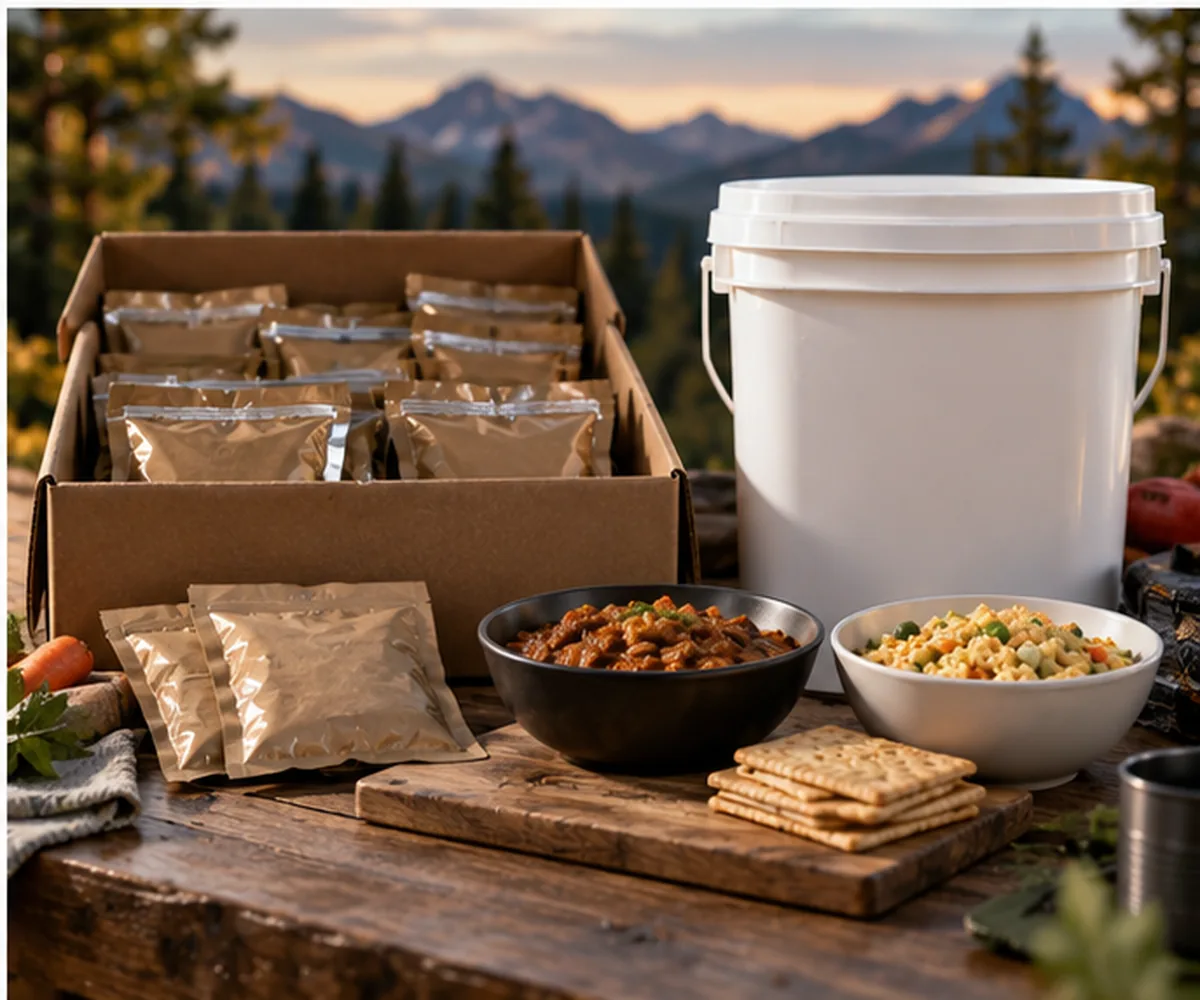
The best emergency food kit is the one that still works under the conditions you are preparing for. Instead of assigning a fake universal score, this guide separates two useful formats and shows what to check before buying.
Two useful Prepared Bee options
MRE STAR M-018H
Prepared Bee lists 12 complete meals, about 1,200 calories per meal, six varieties and a flameless ration heater for each meal. Entrées are fully cooked and require no rehydration water.
Good fit: outages, evacuation, vehicles or a ready-to-eat layer.
Tradeoffs: heavier than dehydrated food. Prepared Bee states up to five years at 70°F or cooler. Menus and allergens vary.
View MRE STARHeaven's Harvest 72-Serving Kit
Prepared Bee lists 72 servings, 15,720 total calories and 11 entrée varieties. It is freeze-dried, requires water for preparation, and carries a merchant-stated 25-year shelf life.
Good fit: longer-term home reserves where compact dry storage matters.
Tradeoffs: depends on safe water. Servings are not the same as days of food, so plan from calories and household needs.
View Heaven's HarvestAffiliate disclosure: Survival Gear Pro may earn a commission from Prepared Bee purchases, at no additional cost to you.
How to compare kits
| Criterion | What to look for |
|---|---|
| Total calories | Use actual calories; serving counts alone can mislead. |
| Preparation water | Account for water beyond drinking and sanitation. |
| Cooking/heating | Know whether food is ready as-is, needs rehydration, or depends on fuel. |
| Storage conditions | Read assumptions behind stated shelf life. |
| Dietary fit | Check current ingredients and allergens. |
| Portability | Consider weight and whether food stays home or moves. |
| Variety | Verify what is actually included. |
Servings are not a complete food plan
A serving is a manufacturer-defined portion, not a universal daily ration. Compare calorie totals and household needs. Emergency food also does not replace water, medications, sanitation supplies and cooking capability.
Should you buy one large kit?
Not necessarily. A layered approach can reduce single points of failure: familiar pantry food for rotation, ready-to-eat meals for immediate use, and longer-storage food for extended disruptions. It also lets your household learn what it actually likes before a larger purchase.
Before ordering
- Check ingredients, allergens and preparation directions.
- Confirm complete meals vs. entrées vs. servings.
- Make sure stored water supports the food.
- Store according to manufacturer guidance.
- Record purchase dates and inspect packaging periodically.
Learn before you buy
Start with the Emergency Food Guide, then read the MRE Guide or MRE vs. Freeze-Dried Food.
Sources
Editorial standards
Survival Gear Pro does not claim personal testing of these products. Product specifications are attributed to the current merchant listing and should be rechecked before purchase. Prices and inventory can change.